

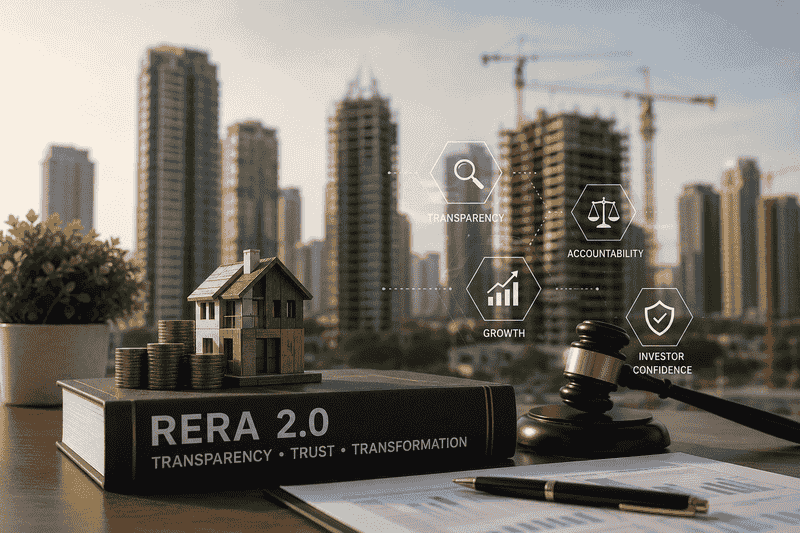
How RERA 2.0 is Transforming Real Estate Investment in India
Featured Snippet Target
RERA 2.0 is transforming real estate investment in India by improving transparency, increasing developer accountability, protecting property buyers, and strengthening confidence in RERA-approved projects. The regulation is reshaping how buyers evaluate residential property investment and long-term real estate development opportunities.
How RERA 2.0 is Transforming Real Estate Investment in India
India’s real estate market has changed significantly over the last decade.
And one of the biggest reasons behind that transformation is RERA.
The Real Estate (Regulation and Development) Act, introduced in 2016, was designed to improve transparency, regulate project execution, and protect property buyers across India’s rapidly expanding real estate sector.
Today, the market is entering what many industry experts informally describe as “RERA 2.0” - a more mature phase of regulation where transparency, accountability, compliance, and buyer confidence are becoming central to how real estate business operates in India.
This shift is not only changing how developers build projects.
It is changing how people invest in property.
From residential property investment to luxury home buying and long-term real estate development investment, regulatory trust is becoming one of the most important decision-making factors in the Indian property market.
What Is RERA and Why Was It Introduced?
The Real Estate (Regulation and Development) Act was introduced to regulate India’s real estate sector and improve accountability among developers.
Before RERA, property buyers often faced issues such as:
● Project delays
● Lack of transparency
● Misleading project information
● Unclear ownership documentation
● Changes in approved plans
● Limited legal recourse
To address these concerns, RERA introduced a more structured regulatory framework for:
● Real estate developers
● Residential property developers
● Real estate companies
● Property marketing practices
● Project approvals
● Buyer protection systems
According to the official RERA Government Portal, every qualifying project and developer must now comply with registration, disclosure, and project reporting requirements.
How RERA Changed Real Estate Investment in India
One of RERA’s biggest impacts has been investor confidence.
For many years, real estate investing in India was heavily relationship-driven and often dependent on informal assurances.
RERA shifted the focus toward:
● Documentation
● Legal transparency
● Registered approvals
● Financial accountability
● Construction updates
● Delivery timelines
This has made property investment decisions more structured and data-driven.
Today, buyers increasingly check:
● RERA registration numbers
● Approved project status
● Legal documentation
● Project timelines
● Developer history
● Construction progress
before making investment decisions.
What Does “RERA 2.0” Mean?
While “RERA 2.0” is not an official legal term, it reflects the next phase of India’s real estate regulation ecosystem.
The industry is now moving beyond basic compliance toward:
● Higher buyer awareness
● Greater digital transparency
● Better project tracking
● Stronger financial discipline
● More organized development practices
The result is a more mature and structured real estate market.
This is especially important for premium home buyers and long-term property investors who increasingly prioritize credibility alongside location and pricing.
RERA Approved Projects Are Becoming More Important
One of the strongest shifts in buyer behavior today is the preference for RERA-approved projects.
Why?
Because registration improves visibility into:
● Project approvals
● Developer commitments
● Delivery timelines
● Land ownership details
● Construction progress
● Legal disclosures
For buyers of property, this reduces uncertainty during the purchasing process.
As a result, RERA-approved projects are increasingly viewed as more trustworthy investment options within the Indian real estate market.
Developer Accountability Has Increased Significantly
RERA has also changed how developers approach project execution.
Today, developers are expected to maintain stronger compliance standards related to:
● Construction timelines
● Financial management
● Project disclosures
● Marketing transparency
● Buyer communication
Funds collected from buyers are also regulated more carefully under RERA provisions to reduce misuse and improve project completion discipline.
This has encouraged a more organized approach toward real estate development in India.
Why RERA Matters for Luxury Home Buyers
Luxury home buyers today are evaluating projects differently than before.
Beyond amenities and architecture, premium buyers increasingly focus on:
● Developer credibility
● Documentation clarity
● Long-term project value
● Regulatory compliance
● Construction transparency
● Ownership security
This makes RERA especially important within the premium residential segment.
In today’s market, luxury is no longer only about presentation.
Trust has become part of the luxury experience itself.
How RERA Is Reshaping Residential Property Investment
The impact of RERA extends far beyond legal compliance.
It is fundamentally changing investment behavior across India property markets.
Buyers are becoming more informed about:
● Carpet area definitions
● Real estate documents
● Land ownership verification
● Developer approvals
● Delivery commitments
● Project registration status
This is creating a more educated property investment ecosystem.
As a result, real estate developers are also being pushed toward higher execution standards and stronger operational discipline.
Technology and RERA Are Improving Transparency Together
One major advantage of the current regulatory phase is digital accessibility.
Most state RERA websites now allow users to check:
● Project registration details
● Developer information
● Complaint records
● Approval status
● Construction progress updates
This has significantly improved access to real estate information for investors and property buyers across India.
Digital transparency is becoming one of the strongest forces shaping modern real estate business practices.
How RERA Impacts Long-Term Real Estate Development Investment
For institutional and long-term investors, regulatory transparency improves market confidence.
A more organized real estate ecosystem helps encourage:
● Better capital flow
● Stronger investor participation
● Higher project accountability
● More disciplined property development
● Improved buyer trust
Over time, this can strengthen the long-term stability of India’s real estate market.
What Property Buyers Should Still Check Before Investing
Even with RERA protections, buyers should still independently evaluate projects carefully.
Key things buyers should verify include:
1. RERA Registration Status
Always confirm whether the project is officially registered.
2. Land Ownership Clarity
Check ownership documentation and legal approvals.
3. Developer Track Record
Review previous delivery timelines and project quality.
4. Carpet Area Details
Understand actual usable space before investing.
5. Agreement Terms
Review payment schedules, penalties, and possession clauses carefully.
RERA improves protection - but informed buying decisions still matter.
Final Thoughts
RERA has done more than regulate real estate.
It has changed how trust works within the Indian property market.
Today, transparency, accountability, and compliance are becoming central to how real estate developers operate and how buyers evaluate investments.
As India’s property market continues evolving, RERA 2.0 represents a more mature phase of real estate investing - one where informed decisions, verified information, and long-term credibility increasingly shape investment confidence.
The future of Indian real estate may no longer belong only to projects that market themselves well.
It may belong to projects that build trust consistently.
Frequently Asked Questions (FAQs)
What is RERA in real estate?
RERA stands for Real Estate (Regulation and Development) Act, introduced to regulate India’s real estate sector and protect property buyers.
Why is RERA important for property investment?
RERA improves transparency, developer accountability, project disclosures, and buyer protection during real estate investment.
What are RERA-approved projects?
RERA-approved projects are registered real estate developments that comply with regulatory disclosure and approval requirements.
How can buyers check RERA registration?
Buyers can verify project registration details through official state RERA websites and the national RERA portal.
Does RERA protect luxury home buyers?
Yes. RERA improves transparency and accountability across both affordable and luxury residential property markets.
What documents should buyers verify before purchasing property?
Buyers should verify RERA registration, ownership documents, approvals, agreement terms, and developer credentials.
Has RERA improved real estate transparency in India?
Yes. RERA has significantly improved project disclosures, buyer access to information, and developer accountability.
Is RERA beneficial for long-term real estate investment?
Yes. Improved regulation and transparency help strengthen investor confidence and long-term market stability.